


COMPENSATORY PLANTING MANAGEMENT
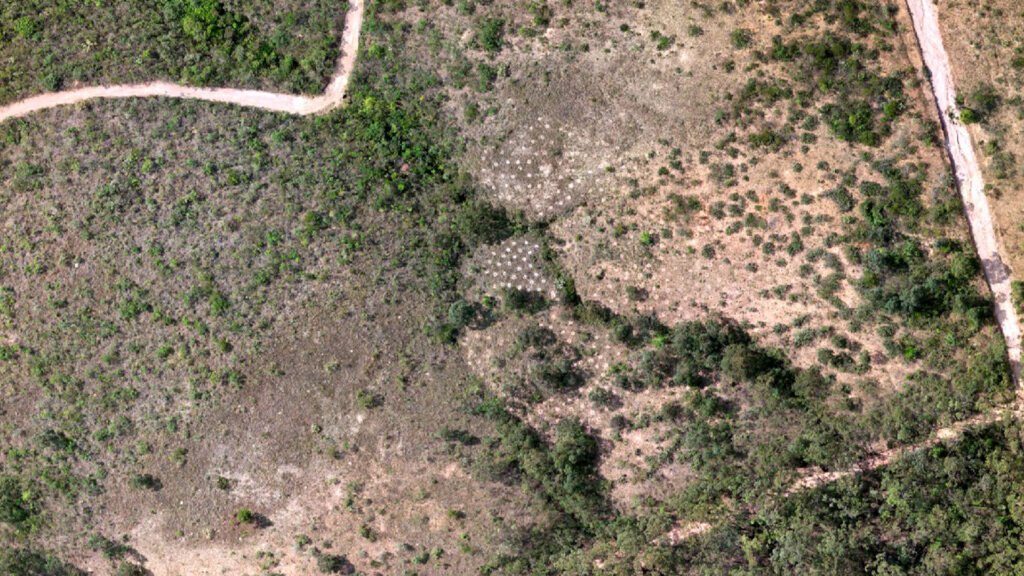
The planting of seedlings plays a crucial role in the recovery of degraded areas, helping to restore damaged ecosystems and promote biodiversity regeneration. And what are the benefits of this process? We can point out some to understand the importance and complexity of plantings: Restoration of vegetation cover, reconstruction of biodiversity, and recovery of ecosystem services.
ESG SOLUTIONS, CORPORATE SUSTAINABILITY, AND IMS

At the forefront of sustainability, CLAM presents new strategies for organizations on the path towards CORPORATE SUSTAINABILITY, through a range of services and products that complement efforts around practices involving the environment (physical, biotic, and socioeconomic environments), and expand into ESG initiatives, encompassing the Environmental and Social Governance pillars in a unique and comprehensive way.
ENVIRONMENTAL EDUCATION IN THE OIL AND GAS SECTOR

A Educação Ambiental, fundamentada na legislação, assume papel crucial na gestão de empreendimentos de óleo e gás, conforme a Política Nacional de Educação Ambiental (Lei 9.795/99) e o Decreto 4.281/02. A Instrução Normativa 2/2012 do Ibama destaca a necessidade de capacitar trabalhadores para avaliar riscos socioambientais, especialmente em operações de óleo e gás.
ENVIRONMENTAL GOVERNANCE AND MINING IN THE AMAZON
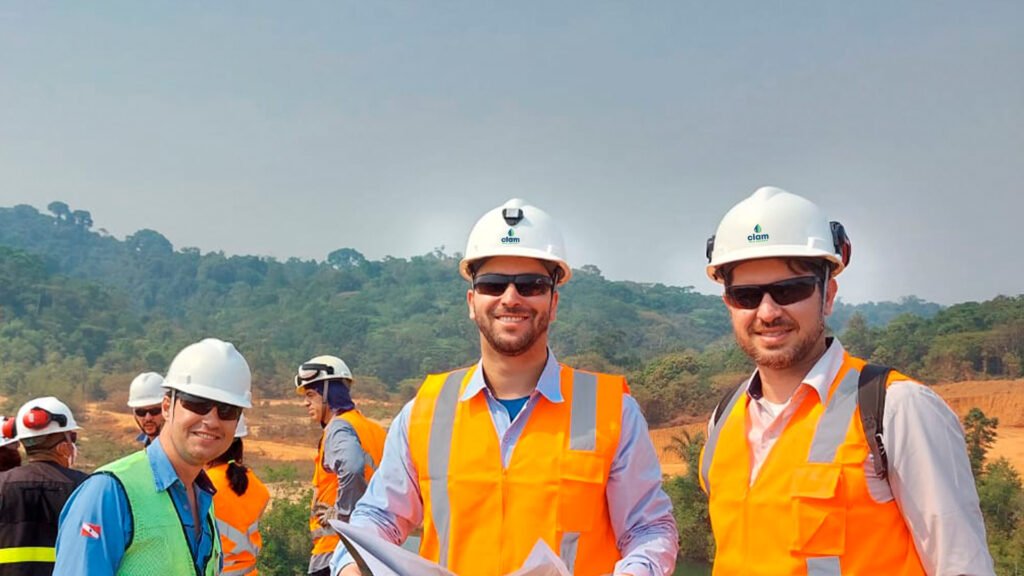
Environmental governance in Brazil continues to be a complex and intriguing challenge given the vast expanse of territory, the diversity of ecosystems, and the economic interests involved.
Companies committed to environmentally responsible practices are already reaping rewards. Innovation processes, sustainable certifications, corporate social responsibility, and measures to promote circular economy are driving positive changes across various sectors. It is important to note that the path to stronger environmental governance in Brazil requires continuous collaboration among the government, civil society, and the private sector to ensure a sustainable future for generations to come.
FOREST MARKET IN BRAZIL: CHALLENGES AND OPPORTUNITIES

Forest restoration and ecosystem initiatives converge on actions aimed at mitigating climate change as formalized in the Paris Agreement, an international panel negotiated among 196 parties, with the vast majority of countries, including major CO2 emitters, ratifying their commitments to the goal of keeping the average global temperature increase below 2 (two) degrees Celsius relative to pre-industrial levels. More recently, they repactured to limit the temperature increase to a maximum of 1.5ºC.
ENERGY TRANSITION: COMPLEXITY AND SCENARIO OF OPPORTUNITIES

A Transição Energética já se manifesta nas nossas vidas de diversas maneiras. Já está a pleno vapor, ainda que o termo em si e seu conceitual possam não ser claros ou difundidos para a maior parte das pessoas. Aquelas lâmpadas de filamentos de tungstênio já tratadas como antigas, as etiquetas de eficiência energética do Inmetro presentes em novos produtos, residências com energia fotovoltaica, bicicletas, motos e carros elétricos, os impactos da guerra na Ucrânia na energia elétrica europeia, novos parques eólicos e um noticiário repleto de notícias que tangem a energia como tema relevante. Questões que consideram energia e redução das emissões de gases de efeito estufa tendem a ser considerados como parte da transição energética.
MINE CLOSURE PLAN

What happens when a mine's production, after years of operation, is terminated due to the depletion of mineral resources? How can the social and environmental impacts associated with this process be mitigated? How can we ensure that the area is not abandoned and that the burden does not fall on society as a whole?
CLEAN ENERGY AND ENVIRONMENTAL PERMITTING

As energias limpas abrangem os sistemas de produção de energia os quais não geram nenhum tipo de poluição, principalmente por emissão de gases de efeito estufa como o CO2, causadores das mudanças climáticas. Este é o caso das energias hidrelétrica, eólica, fotovoltaica (solar), hidrogênio verde, biomassa, dentre outras.
THREATENED FAUNA MONITORING

Wildlife monitoring refers to activities carried out to assess and track the presence, distribution, abundance, and behavior of native or migratory fauna in areas influenced by projects and activities subject to environmental licensing, which are considered to have actual or potential impacts on wildlife.
![pt_BR[1]](https://clam.com.br/wp-content/uploads/2025/11/pt-br1.svg "pt_BR[1]")
![en_US[1]](https://clam.com.br/wp-content/uploads/2025/11/en-us1.svg "en_US[1]")